 Tiny Eden
Tiny Eden: not enough sunlight, and how to fix it
Light in Tiny Eden is a property of the spot, not the plant. The official FAQ is explicit: light depends on where you place the plant, and you adjust it with shading nets to cut light or grow lights to add it. A low-light warning means the position is wrong for that species, so you either move the pot or add a lamp.
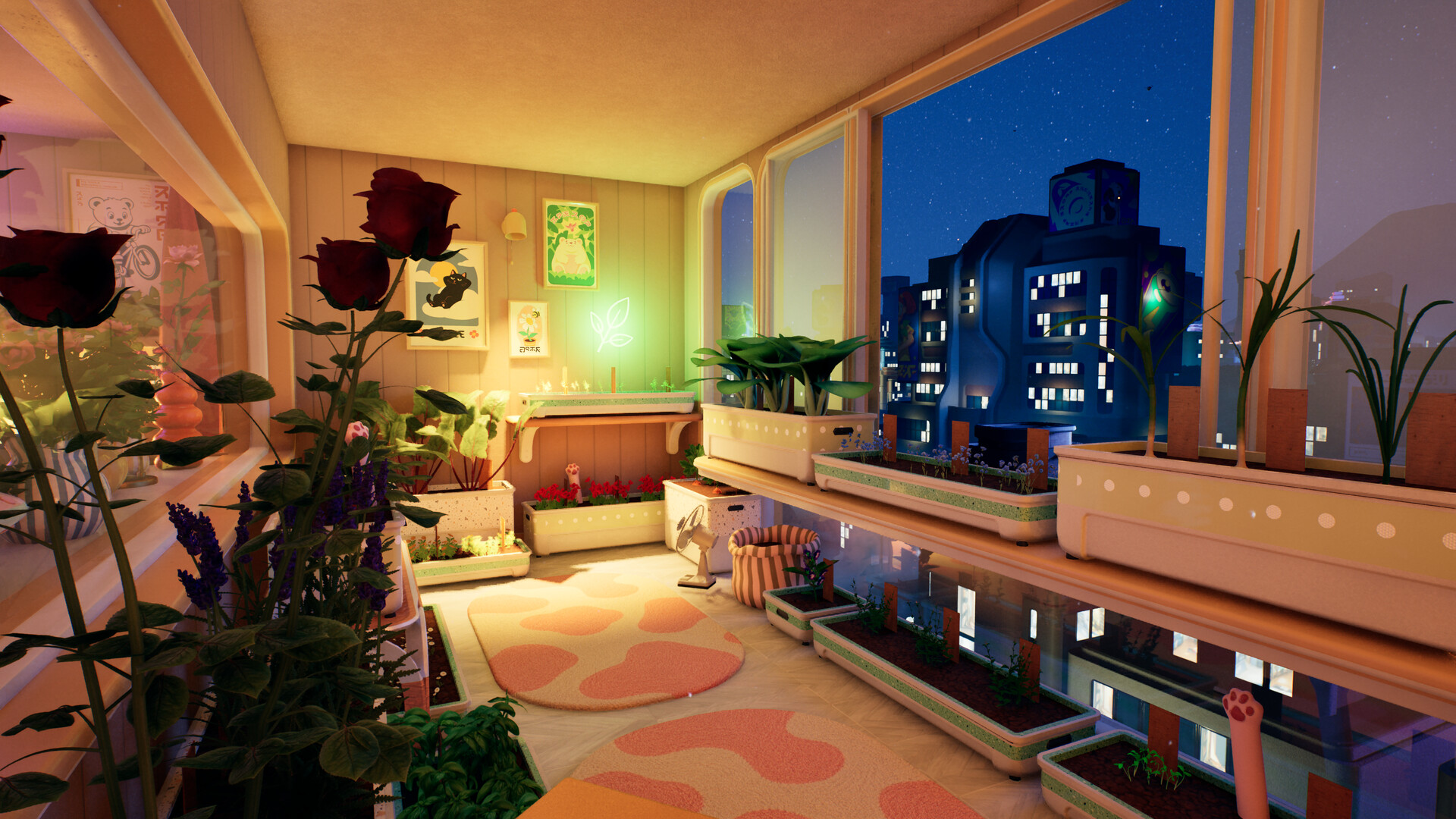
Light is a property of the position
The developers describe light as something determined by placement. Each room and balcony has its own environmental conditions, so two spots in the same apartment can read very differently.
This is why moving a pot is often the whole fix. Before buying equipment, try the plant in a different room, on a balcony, or on the rooftop, which the FAQ calls a key part of the game.
The two tools that change light
Only two light tools are named in the official FAQ: shading nets and grow lights. Shading nets reduce light for plants that are getting too much; grow lights add it where the position cannot supply enough.
The FAQ does not give numbers for how much either tool shifts the reading, so the practical approach is to add a grow light and watch the plant's condition panel rather than aiming for a target value.
- Shading nets — reduce light in over-bright spots
- Grow lights — add light where placement cannot
Light interacts with temperature and season
Light does not sit alone. Temperature depends on location and season, and the FAQ gives a concrete ordering: balconies are warmer than rooftops but colder than indoor spaces. You control temperature with heaters and air conditioners.
Because season shifts these values — the same thing that moves the temperature band — a position that worked in one part of the year can stop working later. A plant that suddenly reports a problem may be sitting in the same spot under different seasonal conditions.
Check the plant's own requirement first
Every species carries its own conditions rather than a shared standard. The in-game plant panel shown in the official Demo trailer lists planter size, soil type, a temperature band, a light requirement, a feeder class and whether the plant needs pollination.
That means a low-light warning is relative. The same corner that starves one species can be correct for another, so it is worth checking whether a different plant suits the spot before rebuilding the lighting.
The rooftop is the high-light option
The rooftop is described as a key part of the game, and some plants can only be grown there. It is the most exposed growing space you unlock, which makes it the natural home for species that keep reporting insufficient light indoors.
It comes with a trade-off the FAQ states directly: rooftops are colder than balconies. Solving a light problem by moving up can create a temperature problem, which is where heaters come in.
For which crops the sun icons and lamps help, and what players found in greenhouses, see the greenhouse and sun icons page.
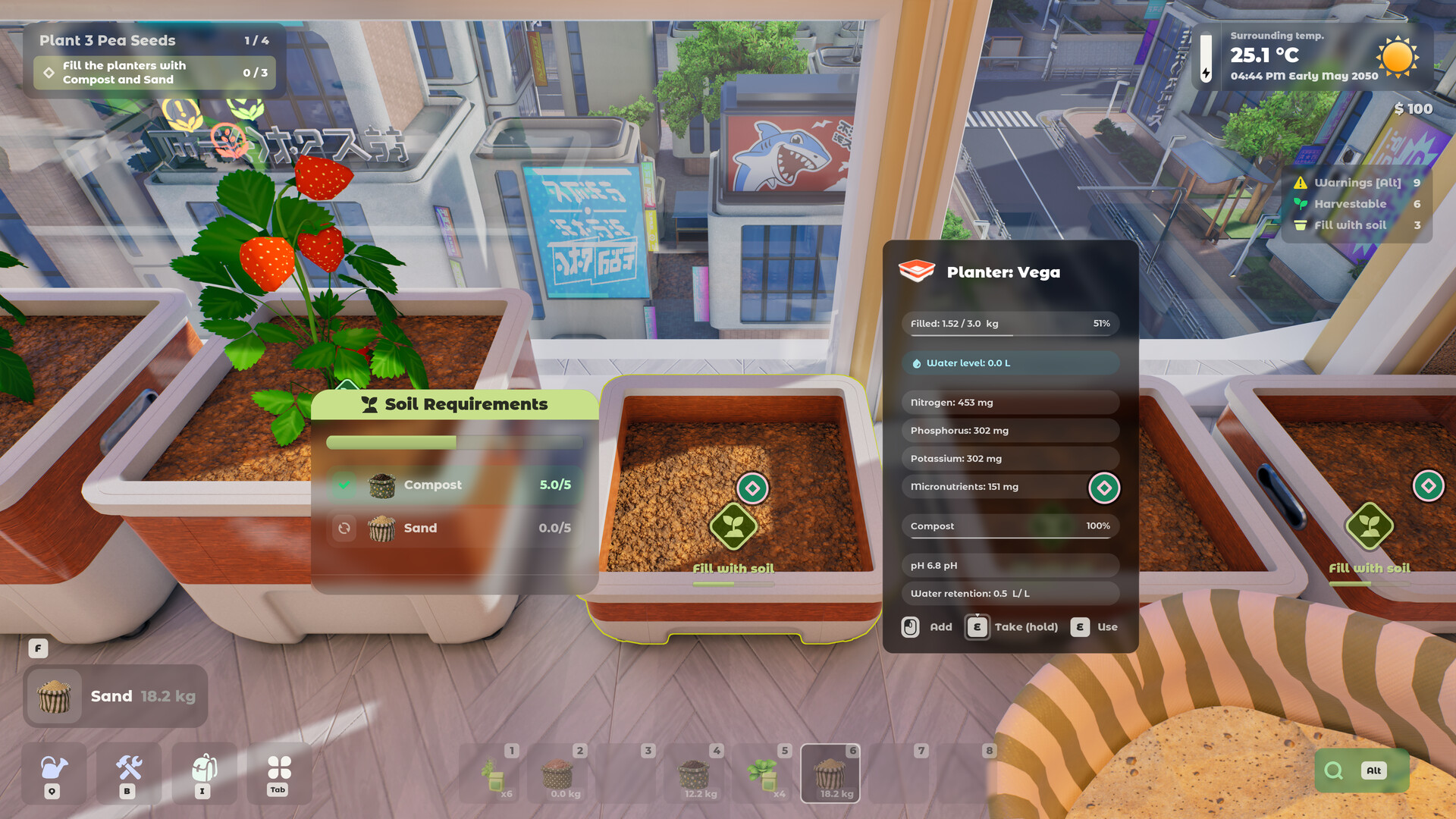
Light, temperature and soil are read separately
A plant checks each condition on its own rather than averaging them into one score. That is why fixing light can leave a plant unhappy — the temperature band or the soil mix may still be out of range.
Soil in particular is its own system: seven components blended to set NPK and micronutrients, aeration, water permeability and retention, and acidity. No amount of light compensates for a mix that misses those.
There is no penalty for getting it wrong
The developers confirm there is no game over and no time pressure. A plant sitting in poor light will report a problem, but it does not cascade into losing the run.
That makes light a thing to experiment with rather than avoid. Moving a pot costs nothing, and the condition panel tells you immediately whether the new position reads better.
Time runs at 60:1, so you also do not need to wait long to see whether a change took effect.
See it running
Not confirmed yet
- The FAQ does not give numeric light values or thresholds.
- Whether light (as opposed to temperature) varies by season is not stated.
Frequently asked
- How do I add light in Tiny Eden?
- Grow lights. The official FAQ names them as the tool for adding light where placement cannot supply enough.
- Can a plant get too much light?
- Yes — shading nets exist specifically to reduce light, which implies over-exposure is a real state.
- Does light change with the season?
- The FAQ ties season to temperature explicitly. Whether light itself varies by season is not stated (unconfirmed).
Sources
Every fact here is drawn from the official sources above. Points the developers have not confirmed are marked as not confirmed rather than guessed.