 Tiny Eden
Tiny Eden plants: what the ~40 species have in common
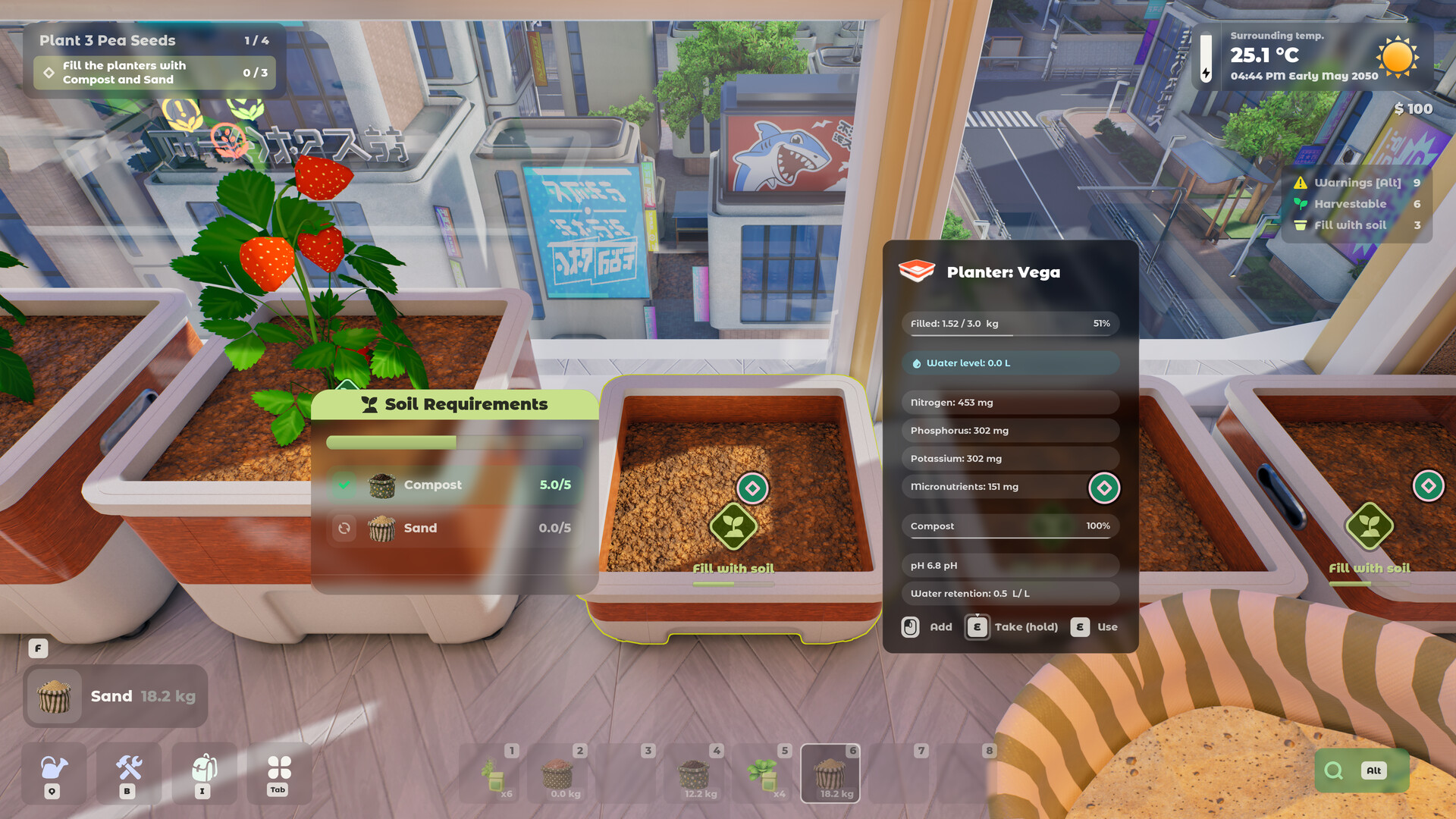
The base game includes around 40 plant species — microgreens, root vegetables, flowers and berry bushes. Every one of them, tracked through four growth stages, carries its own record: a planter size, a soil type, a temperature band, a light requirement, a feeder class and whether it needs pollination. None are locked behind plant progress, but some seeds need standing with the other residents.
- ~40species
- 4families
- 4growth stages
- several hundredmax plants
Four families, around 40 species
The official FAQ gives both the count and the categories: around 40 plant species in the base game, spanning microgreens, root vegetables, flowers and berry bushes. That mix is deliberate rather than decorative.
The developers have said that if things go well they plan to expand into mushrooms, vines and trees. That is stated as an intention, not a shipped feature, so treat it as roadmap rather than content.
- Microgreens
- Root vegetables
- Flowers
- Berry bushes
- Mushrooms, vines and trees — planned, not confirmed for launch
Every plant is a record, not a name
The plant condition panel shown in the publisher's Demo trailer makes the data model visible. It lists planter size and quality tier, soil type, a temperature band, a light requirement, an income tier, and an Additional info block carrying a feeder class and a pollination requirement.
That is why two plants that look similar can behave completely differently. A heavy feeder in a small planter, or a mix that misses its targets, fails for reasons that have nothing to do with the species being difficult.
The community sheet the developers linked has a soil recipe, a planter depth and a sun rating for 38 plants; see the soil recipes page and the planter chart.
| Field on the plant panel | What it constrains |
|---|---|
| Planter size and tier | The container the plant needs |
| Soil type | Which of your mixes it accepts |
| Temperature band | A range, not a single target |
| Light | How much the position must supply |
| Feeder class | How hard it draws down nutrients |
| Pollination | Whether it needs pollinators to produce |
| Income | Its earning tier |
Four growth stages
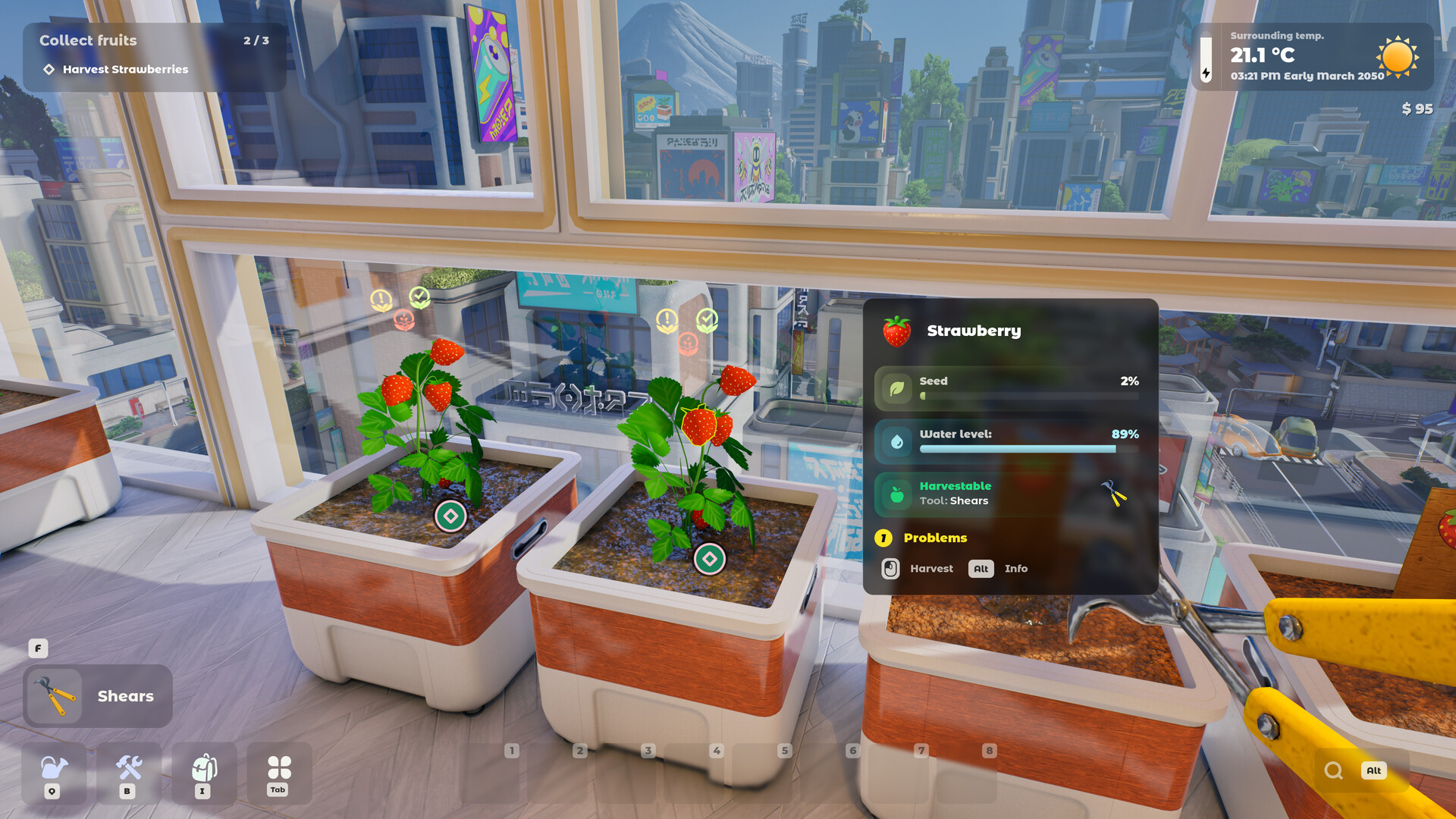
Plants move through four main stages: Sprout, Seedling, Mature and Wilting. Each stage asks something different of you.
The FAQ describes the split directly — early stages require care such as weeding, disease treatment and maintaining conditions; mature plants are harvested and maintained; wilting can signal replacement, or be used deliberately to attract pollinators.
- Sprout — care and condition-keeping
- Seedling — care and condition-keeping
- Mature — harvest and maintain
- Wilting — replace, or use to attract pollinators
Nothing is gated by plant progress
The FAQ is explicit that plants have different growing requirements but none are locked behind plant progress. There is no tech tree forcing you through easy species first.
The real gate is social. You may need to improve your standing among the other apartment residents in order to buy the seeds, which ties plant access to the reputation economy rather than to a skill level.
Variety is pushed by the economy
You can specialize in specific crops if you want, but the FAQ notes the economy revolves around recipes that require multiple ingredients, so growing a variety is encouraged.
Companion planting reinforces that — the developers give basil protecting tomatoes from pests as their own example. Mixed planting is a mechanic, not just flavour.
Where plants can physically go
The apartment is the map. You can change walls and floors, expand into new rooms, and eventually unlock the rooftop, with a ceiling of several hundred plants indoors and on the rooftop combined.
Two rooms cannot be cleared for planting: the kitchen and the lab are fixed elements. You can customise materials throughout, but not the layout geometry itself.
- Indoor rooms — warmest of the three zones
- Balconies — warmer than the rooftop, colder than indoors
- Rooftop — coldest, and some species grow only here
- Kitchen and lab — fixed, cannot be converted to growing space
Time, seasons and pace
The game clock runs at a 60:1 ratio, and seasons change with it. Since temperature depends on both location and season, a plant that thrived in one part of the year can start reporting problems later without you moving it.
None of that carries a penalty. The developers state plainly that there is no time pressure and no game over — as long as you take care of your plants, you will be fine.
That pace is deliberate. The team describes the game as something you can play to relax and decorate, or to optimise production systems and breeding, and says the tone depends entirely on which of those you choose.
Not confirmed yet
- The full species list has not been published — only the count and the four families.
- Feeder classes are visible in footage but the full set of tiers is not documented.
Frequently asked
- How many plants are in Tiny Eden?
- Around 40 species in the base game, per the official FAQ.
- Are any plants locked behind progression?
- No. The FAQ says none are locked behind plant progress, though some seeds need standing with the residents.
- Will more plant types be added?
- The team plans mushrooms, vines and trees if things go well. That is stated as a plan, not a confirmed release.
Sources
- Official Tiny Eden FAQ (Steam, 4 May 2026)
- Official Demo trailer (Digital Vortex Entertainment)
- Tiny Eden Steam store page
Every fact here is drawn from the official sources above. Points the developers have not confirmed are marked as not confirmed rather than guessed.