 Tiny Eden
Tiny Eden temperature: where it is warm and how to change it
Temperature in Tiny Eden depends on two things — where the plant sits and what season it is. The official FAQ gives a clear ordering: balconies are warmer than rooftops, but colder than indoor spaces. You adjust it with heaters and air conditioners.
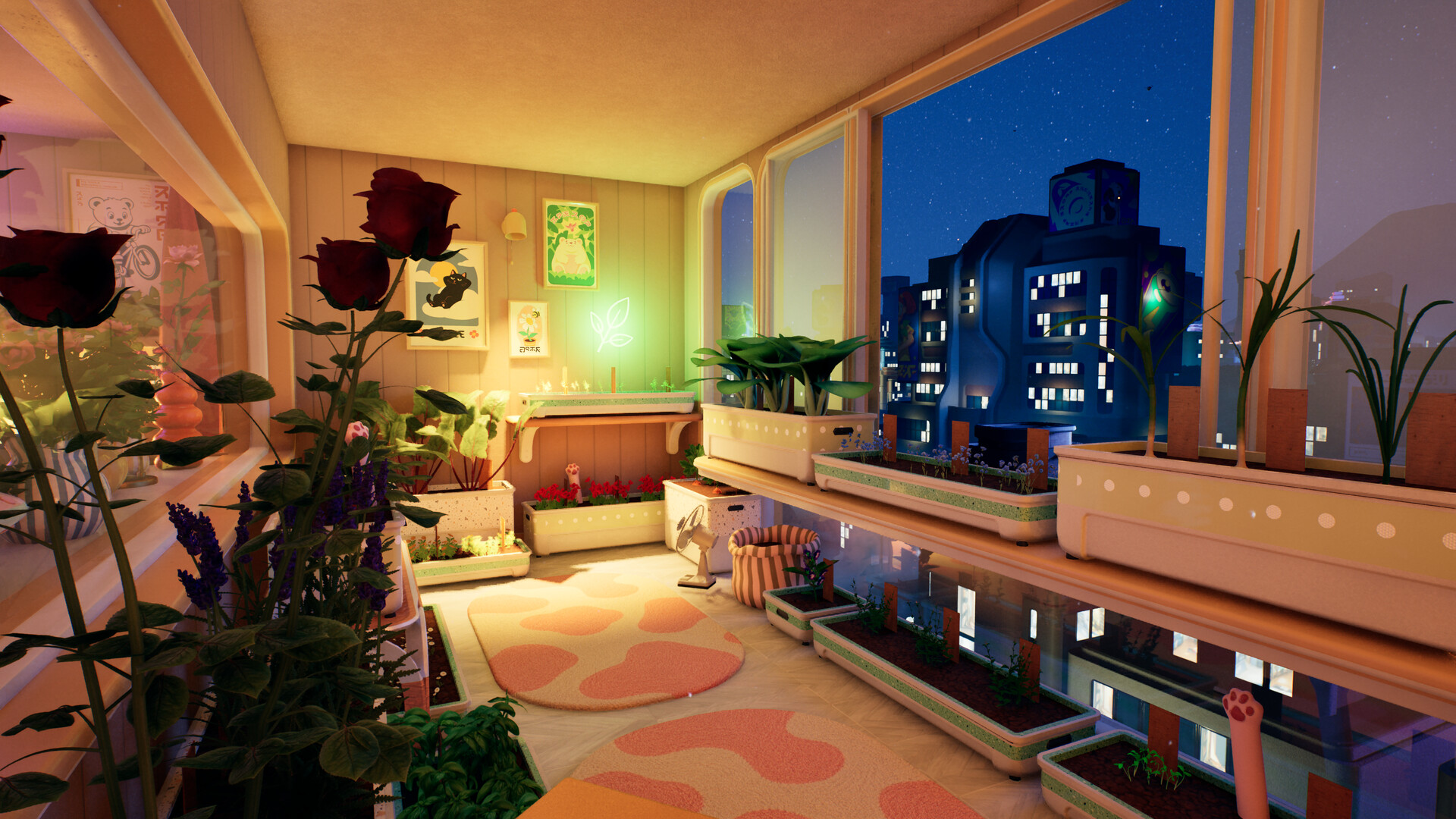
The warmth ordering, straight from the developers
The FAQ states the relationship plainly rather than leaving it to be discovered: indoor spaces are the warmest, balconies sit in the middle, and rooftops are the coldest of the three.
That ordering is useful for planning because it turns the apartment into a temperature gradient, and it pairs with how light varies by spot. Moving a pot inward warms it; moving it up cools it.
| Location | Relative warmth |
|---|---|
| Indoor rooms | Warmest |
| Balconies | Warmer than rooftops, colder than indoors |
| Rooftop | Coldest |
Season moves everything
Season is the second input. The same spot reads differently across the year, which means a plant can start reporting problems without you having touched it.
The game runs time at a 60:1 ratio, so seasons arrive at a real pace rather than instantly — which also moves where each plant sits in its growth cycle. There is no time pressure and no game over — the FAQ is explicit that as long as you take care of your plants you will be fine.
Heaters and air conditioners
Two control devices are named: heaters and air conditioners. They are the direct counterpart to shading nets and grow lights on the light axis.
The FAQ does not publish how many degrees either device shifts a space, so the practical loop is to place one and read the plant's condition panel rather than aim at a number. In launch week heaters could appear to do nothing at all; that was a bug in overlapping temperature zones, fixed in Update #3 (what to check if one still does nothing).
- Heaters — raise temperature in cold spaces
- Air conditioners — lower it in warm ones
Plants carry a temperature band, not a single value
The plant condition panel visible in the official Demo trailer shows temperature as a range rather than a target — one plant in that footage reads a 22-24°C band. Alongside it the panel lists planter size, soil type, light, a feeder class and a pollination flag.
A band rather than a point means there is slack. You are looking to land inside a window, which is why a heater in a cold room can be enough without precise tuning.
A community sheet groups about 20 crops into three bands, 5-25, 5-35 and 10-40 °C. The table is on the greenhouse page.
Each room is its own microclimate
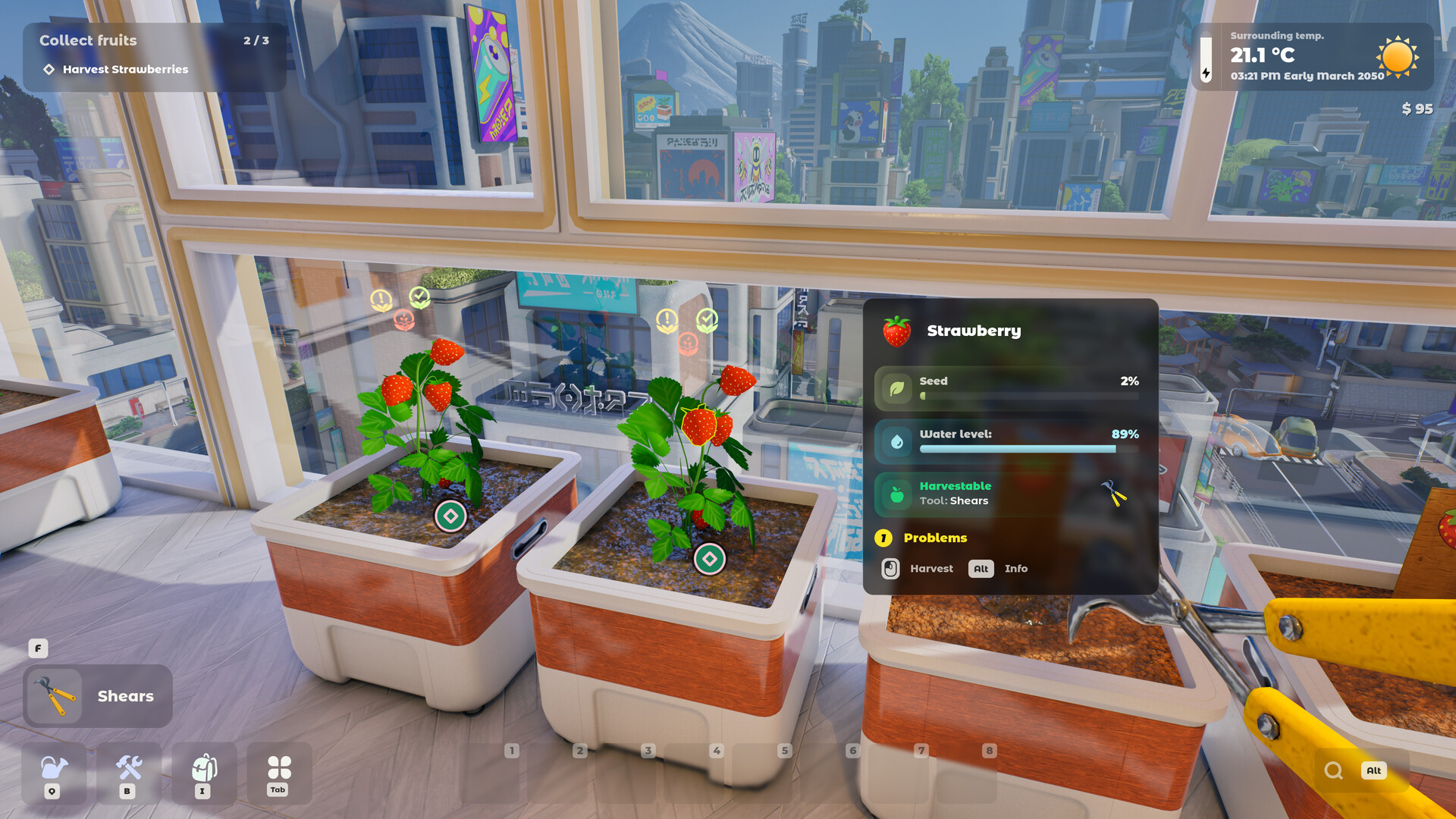
The FAQ says each room and balcony has unique environmental conditions that affect plant growth. The apartment is therefore not one climate but several, and part of the game is learning which corner suits which species.
Because light and temperature both vary by position, the two axes often pull against each other — the rooftop gives the most light and the least warmth.
What the in-game HUD actually shows
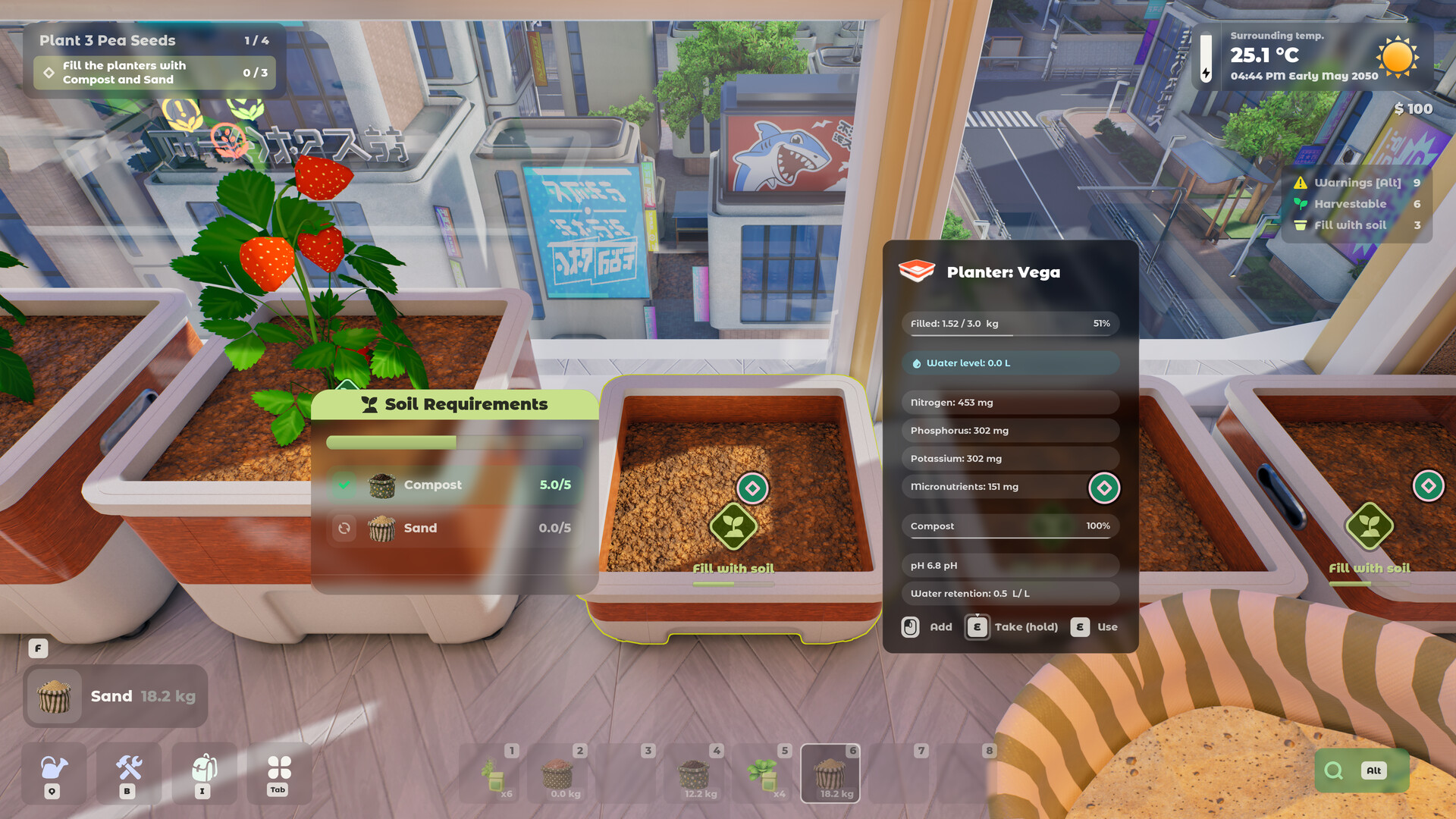
Official screenshots show temperature as a live readout in the top-right corner of the screen, labelled Surrounding temp. and given to one decimal place — 21.1 °C in one published shot.
Next to it sits the in-game clock and date. One screenshot reads 03:21 PM, Early March 2050, which confirms both the near-future setting and that months are subdivided into early, mid and late periods rather than tracked as single blocks.
Why season matters more than it looks
Because seasons subdivide, temperature shifts in smaller steps than a four-season model would suggest. A plant sitting at the edge of its band can cross out of it as one month rolls into the next.
The game runs at 60:1, so those transitions arrive at a real pace rather than instantly. There is no penalty for being caught out — no time pressure and no game over — but a plant left outside its band will show a problem on its condition panel.
Not confirmed yet
- Exact temperature values per room are not published.
- How much a heater or air conditioner shifts a space is not documented.
Frequently asked
- What is the warmest place in Tiny Eden?
- Indoor spaces. The FAQ orders them above balconies, which are in turn warmer than the rooftop.
- How do I raise temperature?
- Heaters. Air conditioners lower it. Those are the two devices named in the official FAQ.
- Does temperature change over the year?
- Yes — the FAQ states temperature depends on location and season.
Sources
- Official Tiny Eden FAQ (Steam, 4 May 2026)
- Official Demo trailer (Digital Vortex Entertainment)
- Update #3 patch notes (Steam, 10 Sep 2026)
- Tiny Eden – Planters & Plants (unofficial community spreadsheet, linked by the developers on Steam)
Every fact here is drawn from the official sources above. Points the developers have not confirmed are marked as not confirmed rather than guessed.