 Tiny Eden
Tiny Eden soil: the seven components explained
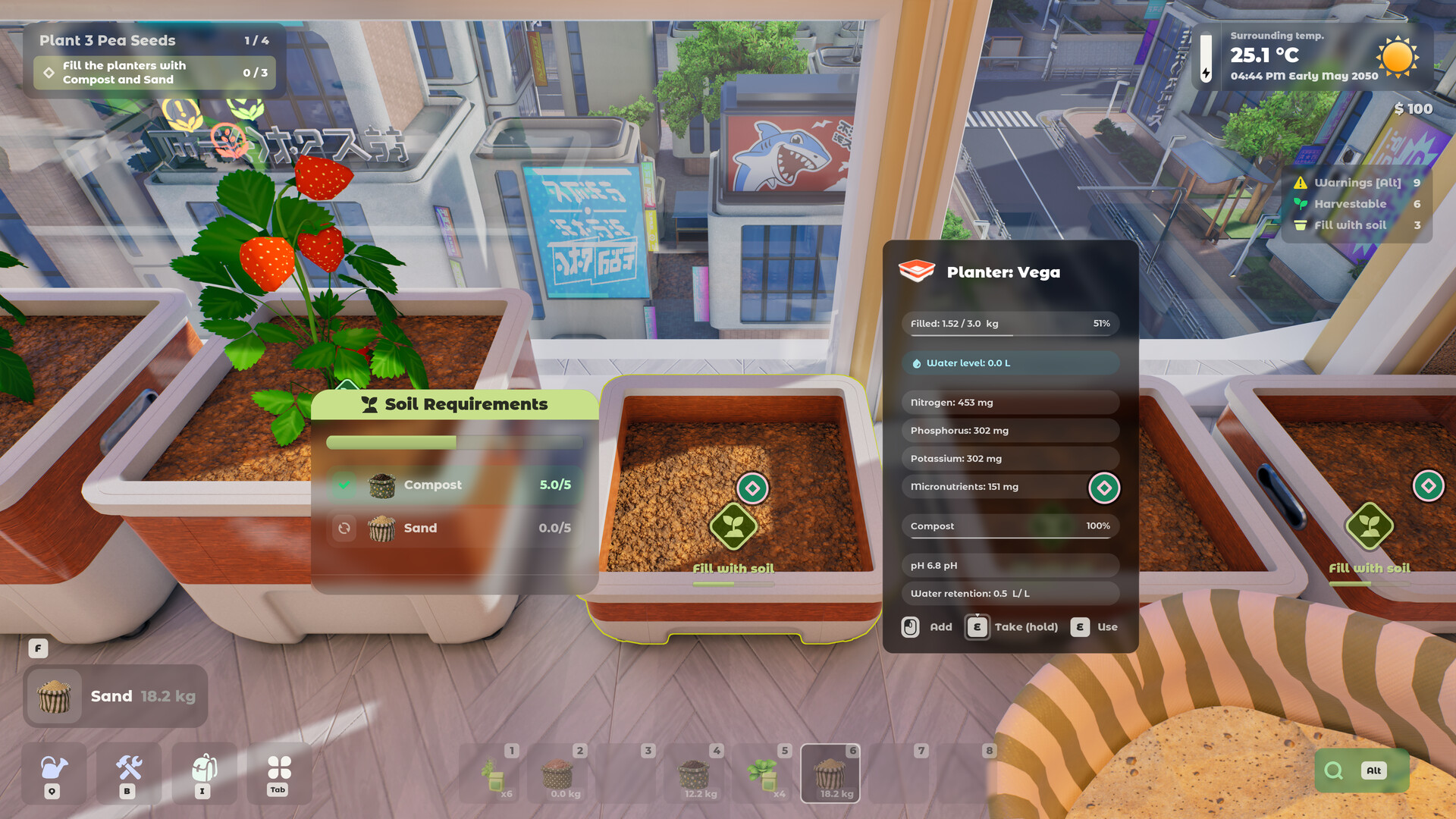
Tiny Eden soil is built from seven agricultural components — compost, sand, clay, perlite, coco coir, peat, and one ingredient the developers have not named yet. You mix them yourself rather than buying finished soil, and the blend decides four measurable properties: NPK and micronutrients, aeration, water permeability and retention, and acidity.
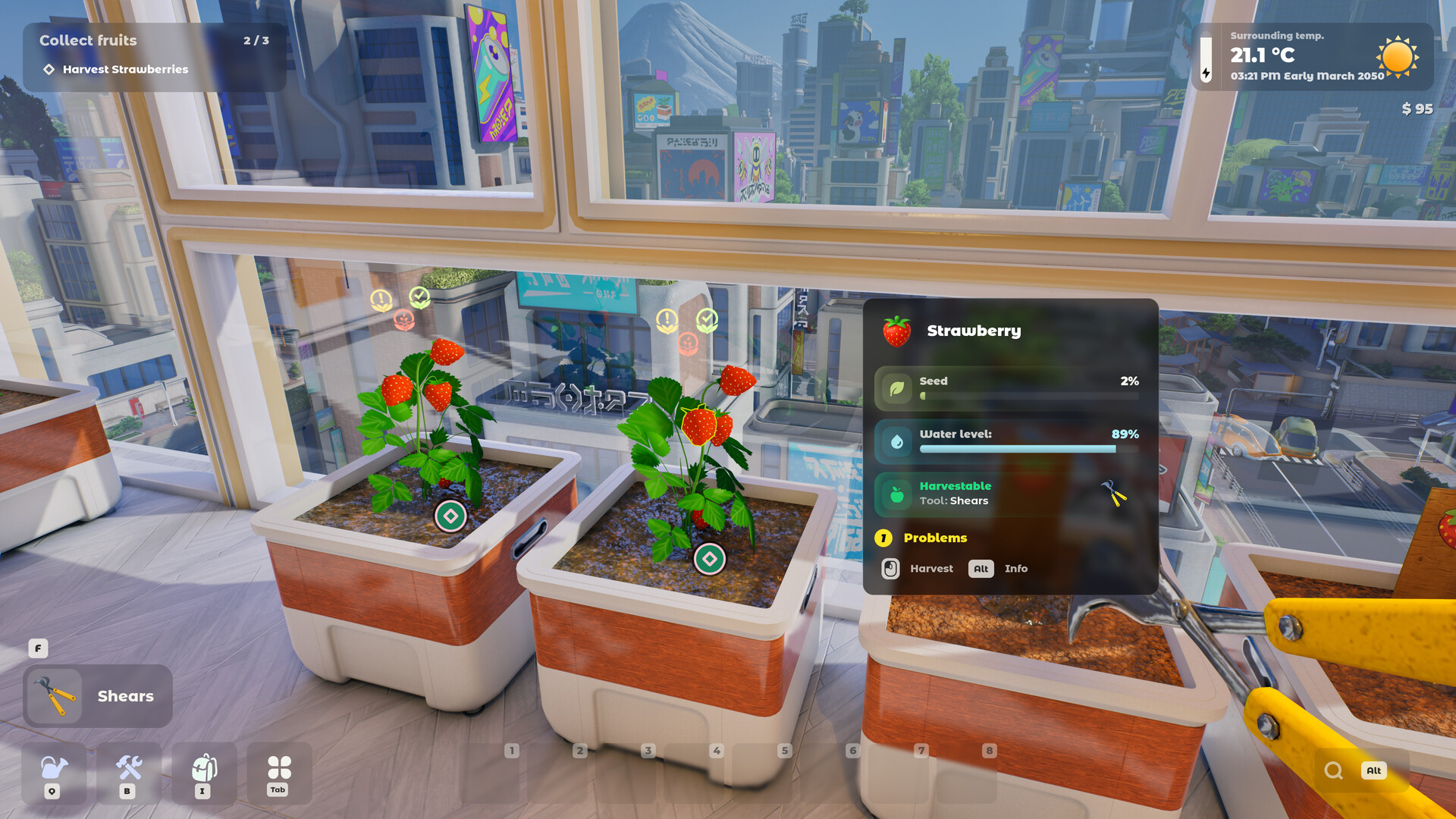
- 7soil components
- 4parameters
- ~40plant species
- 4growth stages
The seven components
The developers confirmed the exact count in the official FAQ: soil consists of seven agricultural components. Six of them are named — compost, sand, clay, perlite, coco coir and peat. The seventh is described only as "one secret ingredient" and has not been revealed.
That framing matters for how you play. Because soil is assembled rather than purchased, a plant that fails is usually a mixing problem — or a species asking for something the mix does not give — rather than a missing item. The same six named components appear across every growing space, so what you learn on a windowsill carries to the rooftop.
A per-plant table of the recipes, including the nine plants that need super compost, is on the soil recipes page.
- Compost — the organic fraction; players report an upgraded composter also makes super compost, which some crops need
- Sand — drainage and structure
- Clay — retention and density
- Perlite — aeration
- Coco coir — water retention
- Peat — organic bulk and acidity
- One secret ingredient — not yet announced (unconfirmed)
What the mix actually controls
The FAQ lists four chemical and physical parameters that the blend determines, and a planter that reports not enough soil is a separate problem from a bad blend. Those are NPK and micronutrients, aeration, water permeability and retention, and acidity. Every plant reads those four values rather than a single soil-quality score.
This is why one universal mix does not work across the whole apartment. A species that wants sharp drainage and one that wants retention pull the recipe in opposite directions, so you end up keeping several blends rather than one.
| Parameter | What it covers |
|---|---|
| NPK and micronutrients | The nutrient load the plant draws down over time |
| Aeration | How much air the root zone holds |
| Water permeability and retention | How fast water passes through and how much stays |
| Acidity | The pH the plant sits in |
Soil degrades — four things act on it
A mix is not set-and-forget. The FAQ names four forces acting on soil after planting: organic degradation, soil-borne diseases, growth hormones and immune boosters, and fertilizers. Plants also consume nutrients as they grow, so the values you mixed on day one drift.
Fertilizer comes in three forms — pellet, liquid and aerosol. The developers list them as distinct items rather than one generic fertilizer, which suggests they behave differently, though the FAQ does not spell out how they differ.
- Organic degradation
- Soil-borne diseases
- Growth hormones and immune boosters
- Fertilizers in pellet, liquid and aerosol form
Soil is only one of three environmental axes
Soil sits alongside light and temperature. Light depends on where you place the plant, and you can adjust it with shading nets or grow lights. Temperature depends on location and season — balconies are warmer than rooftops but colder than indoor spaces, and you control it with heaters and air conditioners.
Each room and balcony has its own environmental conditions. That means a mix that works in one room can underperform two metres away, because the light and temperature it was balanced against have changed.
Why the system is this deep
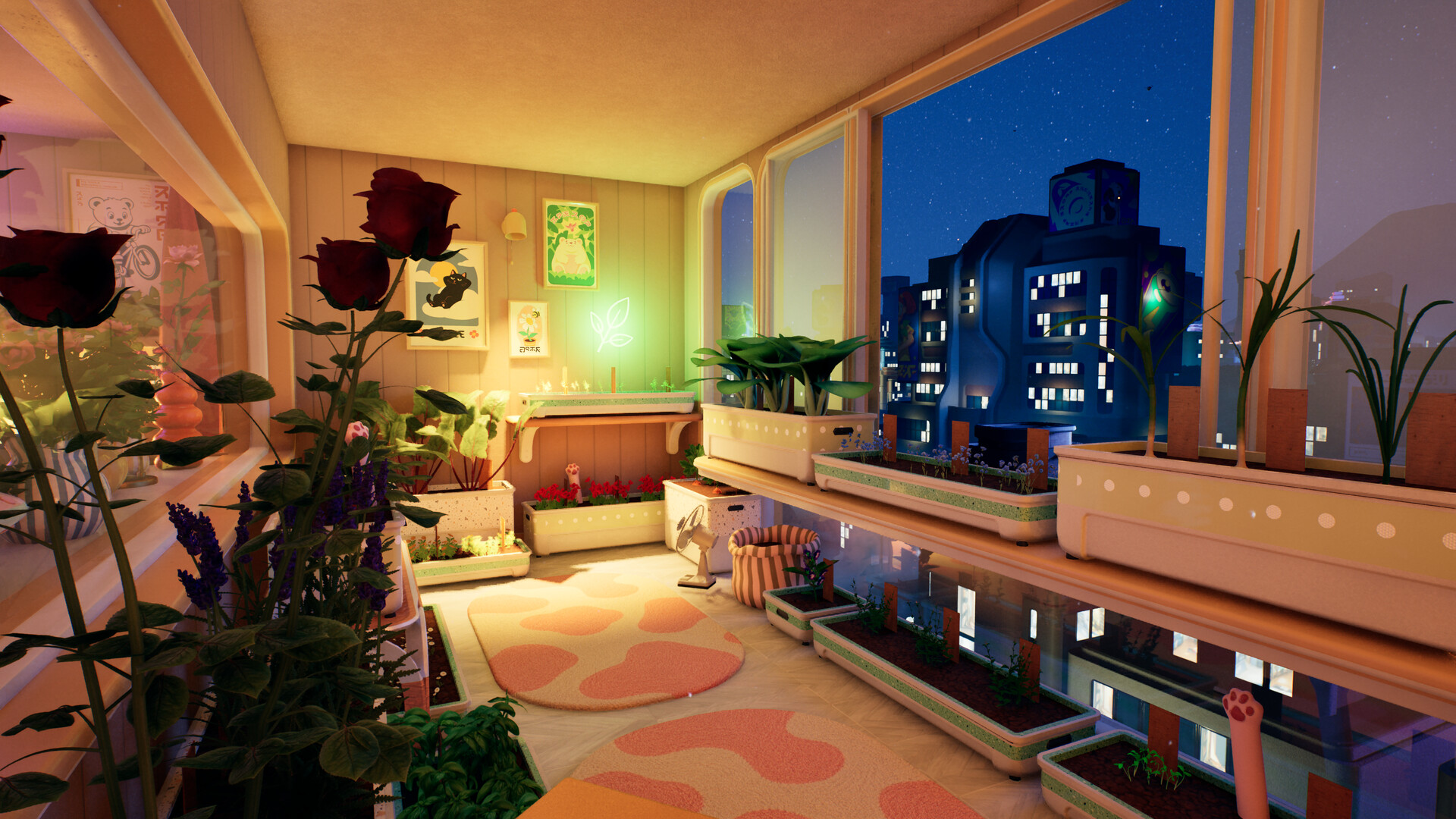
The developers say the game leans toward realism and that the soil model comes from their own experience. Their stated position is that if they tried something in real life, it made its way into the game, and that techniques which work in Tiny Eden should also work on a real windowsill.
You can also attract beneficial insects and pollinators, which the FAQ groups with the soil and growing systems rather than treating as decoration.
Why the developers built soil this way
Tiny Eden exists because its team could not find a farming sim set inside a player's apartment. Most farming sims, in their words, offer an idyllic semi-open world using tools that have not changed much since Harvest Moon. They wanted the city instead, with its limitations and its particular opportunities.
The soil model is the clearest expression of that. It came out of the team's own pandemic-era experiment with urban farming in a Warsaw apartment, which produced a successful harvest in 2023 and then the game.
How soil fits the wider game
Soil is one system in a loop that runs from planting to selling. Crops are harvested, processed into food, sold, and generate money and reputation — money gets reinvested, reputation unlocks new recipes and seeds.
That means soil quality has an economic consequence rather than just a cosmetic one. A mix that underfeeds a heavy feeder produces less to cook with, which slows reputation, which delays the recipes and seeds that reputation unlocks.
There is no failure state attached to any of it. The developers confirm there is no game over — you can run out of money, but recovering is easy, and there is no time pressure as long as plants are cared for.
See it running
Not confirmed yet
- The seventh soil component has not been named by the developers.
- How pellet, liquid and aerosol fertilizers differ mechanically is not documented.
- Whether pre-mixed soil can be bought instead of blended is not stated.
Frequently asked
- What is the seventh soil component in Tiny Eden?
- The developers have not revealed it. The official FAQ names six components and describes the seventh only as "one secret ingredient".
- Can you buy ready-made soil in Tiny Eden?
- The FAQ describes soil as something you mix from the seven components. Whether a pre-mixed option exists in the shop is not stated (unconfirmed).
- Does soil quality drop over time?
- Yes. Plants consume nutrients, and organic degradation plus soil-borne diseases act on the mix. Fertilizers come in pellet, liquid and aerosol form.
Sources
- Official Tiny Eden FAQ (Steam, 4 May 2026)
- Tiny Eden Steam store page
- Steam thread: “how do i get supercompost?”
Every fact here is drawn from the official sources above. Points the developers have not confirmed are marked as not confirmed rather than guessed.